1. Introduction: The Low-Volume Manufacturing Dilemma for Product Developers
During product development cycles, most hardware engineers and product designers face a universal problem: how to produce 5 to 100 pieces of functional parts quickly and cost-effectively before formal mass injection molding.
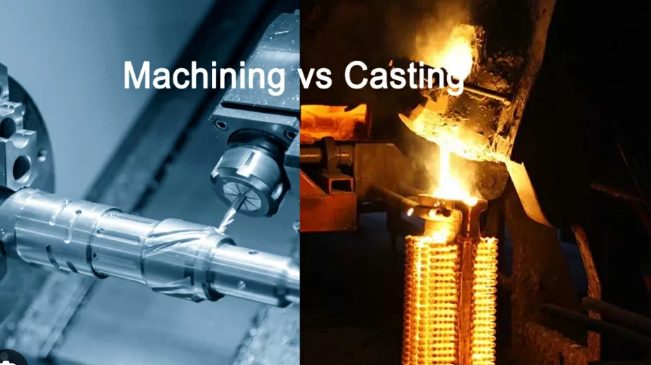
Mass production injection molds cost thousands of dollars and require long lead times, which are not suitable for prototype verification and small-batch trial sales. Currently, two mainstream rapid manufacturing technologies dominate the low-volume production market: vacuum casting and CNC machining.
Many buyers waste budget and time by choosing the wrong process: using expensive CNC machining for cosmetic plastic prototypes, or adopting vacuum casting for high-precision structural parts that require tight tolerances.
As a full-service digital manufacturing platform providing both vacuum casting and CNC machining services, ProtoTech Machining breaks down the core differences, pros, cons and applicable scenarios of the two processes in this blog. Combined with real project cases from 15,000+ global manufacturers, we help you select the most suitable manufacturing solution to cut costs and shorten lead time perfectly.
2. What Is Vacuum Casting? Core Working Principle & Key Pros
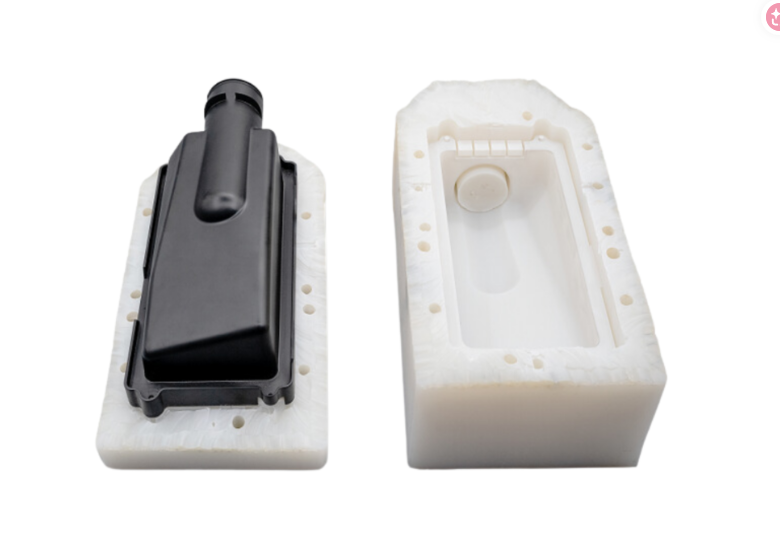
Vacuum casting, also known as silicone mold casting, is a mature rapid prototyping technology for low-volume plastic part production. It uses a CNC-machined original master model to create a flexible silicone mold, then injects liquid polyurethane resin into the mold under a vacuum environment to avoid air bubbles inside finished parts.
Core Working Flow
- Produce a high-precision master part via CNC machining
- Make transparent silicone molds based on the master model
- Inject liquid PU materials in a vacuum chamber
- Solidify, demold and finish surface treatment
Key Advantages of Vacuum Casting
- Ultra-low mold cost: No expensive hard steel injection molds needed; cheap silicone molds support 10-50 copies of parts
- Excellent cosmetic appearance: Perfectly replicates fine textures, patterns and logo details on part surfaces
- Diverse material options: Available with hard plastic, soft rubber-like, transparent, flame-retardant and medical-grade PU resins
- Fast batch delivery: Complete small batch production within 3-5 working days
- Low unit price for small batches: More cost-effective than CNC when production quantity reaches 10 pieces or more
Main Limitations
Vacuum casting cannot support ultra-tight tolerances, and silicone molds will wear gradually after repeated use, so it is not applicable for high-precision structural components or mass production over 100 units.
3. What Is Conventional CNC Machining for Low-Volume Parts?
CNC machining is a subtractive manufacturing method that cuts raw solid plastic or metal blocks into finished parts via automated milling machines. It includes standard 3-axis CNC milling and advanced 5-axis CNC machining for complex-shaped parts, which is the most reliable solution for high-precision one-off prototypes and low-volume structural parts.
Key Advantages of CNC Machining
- Micron-level high precision: Stable tolerance up to ±0.005mm, far better than vacuum casting
- Rich industrial material support: Aluminum, stainless steel, PEEK, ABS, PC and other real engineering materials, not limited to PU resin
- Excellent mechanical performance: Finished parts own consistent strength, hardness and durability matching formal mass production parts
- No mold restriction: Direct production from CAD files, suitable for one single prototype without any mold cost
Main Limitations
CNC machining requires manual programming and material cutting, so the unit cost rises sharply with batch quantity increasing. Meanwhile, complex inner cavity structures are hard to process via traditional CNC milling.
4. Head-to-Head Comparison Table: Vacuum Casting VS CNC Machining
This intuitive comparison table covers all core indicators that buyers care about, helping you make quick decisions without complicated technical analysis:
| Comparison Item | Vacuum Casting | CNC Machining (3-axis & 5-axis) |
|---|---|---|
| Best Production Quantity | 10 – 100 pieces | 1 – 20 pieces |
| Dimensional Tolerance | ±0.1mm ~ ±0.2mm | ±0.005mm ~ ±0.05mm |
| Available Materials | Only PU resin (simulate plastic/rubber) | All metals & real engineering plastics |
| Unit Part Cost | Low for medium small batches | High for each single part |
| Surface Detail Performance | Perfect for fine patterns & logos | Good, but limited by cutting tools |
| Mechanical Strength | Average, not for heavy load use | Excellent, same as mass production parts |
| Typical Lead Time | 3 – 5 working days | 2 – 4 working days |
| Core Application | Cosmetic prototypes, appearance verification, soft-touch parts | Functional testing parts, load-bearing structures, metal components |
5. When to Choose Vacuum Casting for Your Project
Vacuum casting is your optimal choice if your project meets any of the following conditions:
- You need 10 to 100 identical plastic parts for market testing and exhibition display
- Appearance and surface texture are the core demands, while strict dimensional tolerance is not required
- You need transparent parts, soft rubber buttons or colored plastic housings
- Your budget is limited and you want to avoid expensive CNC processing fees for medium batches
- Parts have complex deep inner cavities which are hard to cut by CNC machines
Common industry cases: consumer electronic appearance prototypes, household appliance shells, wearable device casings, cosmetic product housings.
6. When to Choose CNC Machining Instead
Stick with CNC machining (including 5-axis milling) under these scenarios:
- You only need 1-5 pieces for strict functional assembly testing
- Parts need to bear mechanical load, pressure or friction during use
- Ultra-tight dimensional tolerance and high assembly accuracy are mandatory
- You need metal parts like aluminum, stainless steel or copper components
- You require real industrial-grade plastic materials instead of simulation PU resin
Common industry cases: automotive functional test parts, medical structural components, automation equipment fixtures, aerospace prototype parts.
7. Common Misconceptions About Two Rapid Manufacturing Processes
Our engineers summarize three widespread misunderstandings that often lead to project failure:
Misconception 1: Vacuum casting parts can completely replace injection molding parts
Fact: Vacuum casting uses simulation PU materials, whose wear resistance and high-temperature resistance are worse than real injection-molded plastics. It is only for prototype verification, not for long-term formal end products.
Misconception 2: CNC machining is always better with higher precision
Fact: High precision does not mean full suitability. For appearance-only prototypes, CNC machining costs 2-3 times more than vacuum casting with no extra practical value, causing unnecessary budget waste.
Misconception 3: More quantity always means lower cost
Fact: When order quantity exceeds 8 pieces, vacuum casting starts to have obvious cost advantages over CNC machining. Our team can provide free cost comparison analysis according to your order quantity.
8. One-stop Low-volume Manufacturing Solutions from ProtoTech Machining
Different from manufacturers that only support single manufacturing process, ProtoTech Machining provides both vacuum casting and full-range CNC machining services, helping customers match the most cost-effective process without switching multiple suppliers. We also offer exclusive supporting services for low-volume projects:
- Free process recommendation & DFM analysis: Our 27 professional engineers evaluate your drawings for free, recommend the best process and optimize design flaws within 3 hours
- Unified quality standard: All prototype parts follow ISO 9001:2015 quality management system, with full inspection reports before shipment
- Mixed-process support: Support hybrid production: CNC metal structural parts + vacuum casting plastic shells for complete product assemblies
- Consistent after-sales service: Unified 15-day quality claim window and 30-day global quality guarantee for all prototype orders
9. Step-by-step Order Process for Small-batch Parts
- Upload your CAD design files and mark quantity, usage purpose and performance requirements
- Get free process suggestion and detailed quotation within 3 hours
- Confirm manufacturing process and production arrangement
- Full quality inspection and surface finishing
- Global shipping and 30-day quality warranty after delivery
10. Conclusion: Pick The Right Process Based On Your Actual Needs
There is no absolute better option between vacuum casting and CNC machining — only the most suitable solution matching your budget, quantity, precision requirement and part usage.
Choose vacuum casting for medium small-batch appearance prototypes with tight budget; choose CNC machining for high-precision functional test parts and metal components. As a one-stop rapid manufacturing supplier, ProtoTech Machining eliminates your trouble of selecting manufacturing processes, providing free professional technical suggestions and cost-effective production solutions.
If you are confused about process selection for your upcoming prototype project, feel free to upload your design files for a free 3-hour quotation and professional process evaluation. Contact our sales engineer Ellie via email INFO@PROTOTECH-MACHINING.COM or phone +86-180-2549-6795 anytime for customized manufacturing support.