1. 2026 Precision Manufacturing Hot Demand for Swiss CNC Machining
In 2026, global high-tech industries including medical devices, aerospace, automotive electronics and sensor manufacturing face rising demand for miniature, slender components with micron-level dimensional accuracy. Traditional CNC lathes struggle to maintain stable precision on long thin shafts and tiny connectors, leading more engineers to search for professional Swiss CNC Machining suppliers equipped with sliding headstock equipment.
Swiss-type turning, originally invented for watchmaking, has become an irreplaceable subtractive manufacturing solution for any part with small diameter, high length-diameter ratio and complex multi-axis features. As an all-in-one digital manufacturing platform, ProtoTech Machining operates a full Citizen Swiss machine shop, covering high-mix low-volume prototypes to large batch lights-out production without MOQ limits. This guide unpacks the technical strengths, material options and cross-service advantages of our dedicated Swiss machining division.
2. What Is Swiss CNC Machining & Its Unique Working Principle
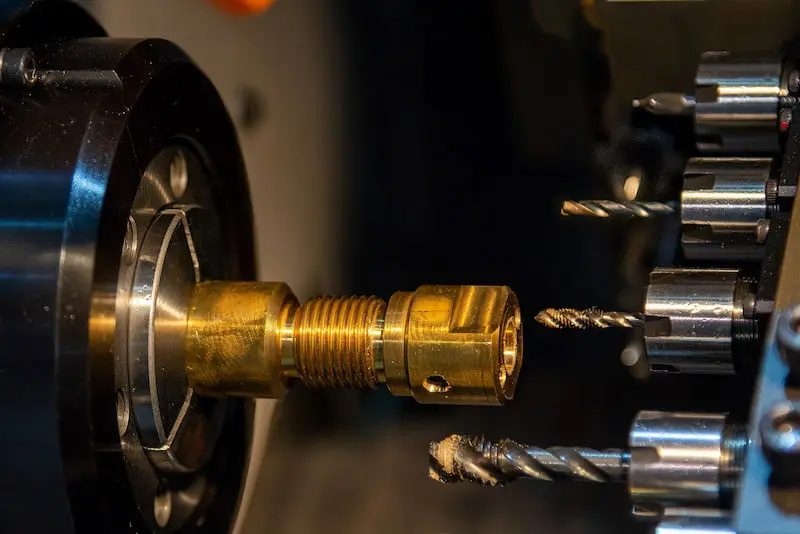
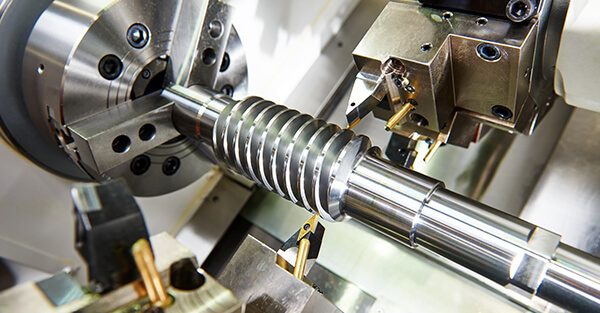
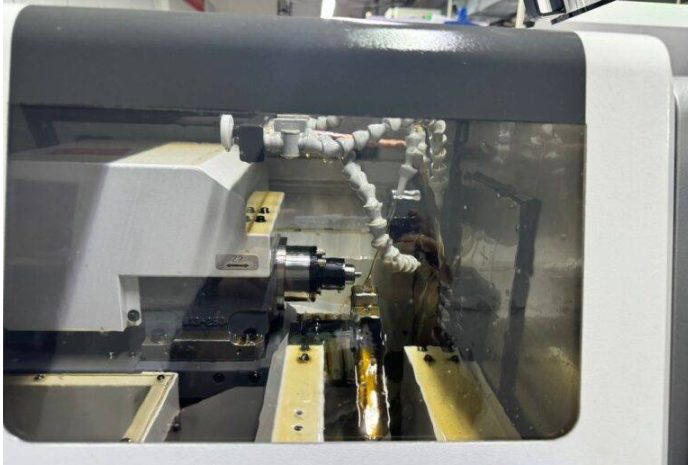
Swiss CNC machining, also named Swiss screw machining or sliding headstock turning, is a specialized precision manufacturing process optimized for miniature bar stock componentsFalcon CNC…. The core mechanical difference separating it from standard lathes lies in the sliding headstock and guide bushing design:
- Bar stock feeds through a fixed guide bushing, which provides rigid support right beside cutting tools (only 1–3mm gap).
- The spindle headstock slides along the Z-axis to push material forward, while cutting tools remain stationary.
- Near-zero workpiece vibration and tool deflection enable ultra-consistent tight tolerances even on slender parts with L/D ratios over 10:1.
Conventional lathes hold workpieces via rear chucks; unsupported long bars bend easily during cutting, causing dimensional drift and poor surface finish. At ProtoTech, all Swiss machines integrate multi-axis live tooling to complete turning, drilling, threading, knurling and cross-milling in one single setup, eliminating repeated re-fixturing and secondary grinding steps.
3. Swiss CNC vs Conventional CNC Turning: Technical Comparison Table
| Comparison Item | Swiss CNC Machining | Standard Conventional CNC Turning |
|---|---|---|
| Core Support Structure | Guide bushing close to cutting zone | Single rear chuck clamping |
| Optimal Part Diameter | Under 1-1/4 inch (32mm), micro parts down 1/16” | 5mm–400mm large cylindrical blanks |
| Minimum Tolerance | ±0.0005 inch | ±0.001–0.005 inch |
| Max L/D Ratio | Up to 20:1 slender shafts | Limited under 4:1 without support |
| Multi-Feature Capacity | Turning, milling, cross drilling, threading in one pass | Separate secondary ops required for side holes |
| Automation Mode | Bar feeder, 12ft stock, 24hr lights-out unmanned | Short blank loading, limited continuous run |
| Best Fit Orders | Medical pins, electronic connectors, micro valves | Large auto shafts, heavy mechanical cylinders |
| Unit Cost for Micro Parts | Lower (fewer secondary processes) | Higher (extra grinding & setup labor) |
This table is a key reference during our free DFM analysis when customers upload CAD files to ProtoTech Machining. Our engineers will automatically recommend Swiss machining if your design features small diameter, long slender geometry or multi-sided complex features.
4. Core Equipment & Production Capacity at ProtoTech Swiss Machining
Our Swiss machining workshop houses over a dozen imported Citizen sliding headstock lathes, fully configured with automatic long bar feeders supporting raw stock up to 12 feet in length. Key capacity highlights on the Swiss CNC Machining service page:
- Machinable diameter range: Micro components under 1/16” up to 1-1/2” bar stock
- Uninterrupted lights-out overnight production to shorten lead times
- Zero minimum order quantity: Accept 1pc prototype to 100,000+ mass batches
- ISO 9001:2015 full quality control, CMM dimensional inspection for every batch
- Blanket release order support for recurring component replenishment
Unlike small local job shops with only 1–2 Swiss machines, our large equipment fleet enables parallel processing of multiple customer orders, avoiding scheduling delays during peak manufacturing cycles. All equipment undergoes daily calibration to guarantee repeatable micron precision across production runs.
5. Supported Materials, Tolerances & Machining Processes
Available Bar Stock Materials
We process all common precision alloys and engineering plastics for Swiss turning: 303/316 stainless steel, titanium, Inconel, brass, copper, aluminum, Kovar, PEEK, nylon and PTFE. Biocompatible stainless and titanium grades are prioritized for medical device compliance.
Standard Precision Tolerance
Our baseline achievable tolerance reaches ±0.0005 inch, adjustable based on material hardness and part geometry. Critical aerospace and medical components can receive custom tighter tolerance control upon request.
In-House Machining Operations
Every Swiss lathe completes full feature processing in one clamping: parting/cutting, form turning, internal/external threading, knurling, cross-hole drilling, slot milling and contour profiling. No extra outsourcing for secondary machining steps.
After turning, all micro parts can directly enter our surface finishing service workshop for anodizing, nickel plating, passivation, laser engraving and polishing, forming a seamless one-stop workflow without third-party transit losses.
6. Industry-Wide Applications of Swiss Machined Micro Parts
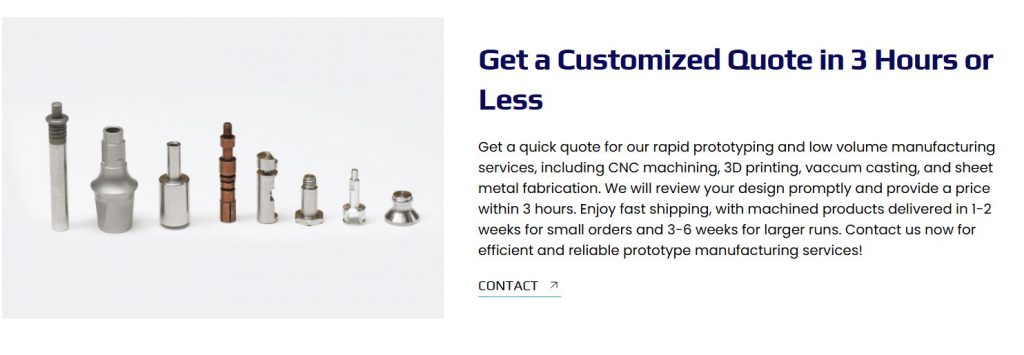
Swiss CNC components serve 9 core verticals listed on our service gallery, with typical finished workpieces including valve fittings, instrument pins, electronic terminals and lead-free brass hardware:
- Medical Devices: Orthopedic bone screws, surgical instrument shafts, catheter connectors, dental abutments. Biocompatible stainless and titanium materials meet sterilization standards.
- Electronics & Semiconductors: Miniature connector pins, sensor ferrules, RF contacts, PCB terminals. Brass and beryllium copper deliver stable conductive performance.
- Aerospace & Defense: Tiny hydraulic valve cores, fuel injector pins, lightweight titanium fasteners with strict traceability requirements.
- Automotive EV & Internal Combustion: Fuel injection tips, ABS sensor housings, turbo control micro shafts.
- **Industrial Automation & Robotics: Mini actuator pins, precision valve components, miniature gear blanks.
- Marine Hardware: Corrosion-resistant stainless small fittings and flow control parts.
- Consumer Hardware & Watchmaking: Tiny threaded shafts, decorative brass micro components.
- Testing & Instrumentation: Laboratory probe tips, optical adjustment sleeves.
- Communications: Fiber optic ferrules, signal transmission micro connectors.
Sample photos of brass Swiss turned parts and stainless micro pins are displayed on the service page to showcase real production quality for global buyers.
7. End-to-End Manufacturing & Surface Finishing Synergy
As a full-service manufacturer, ProtoTech links Swiss turning with all other core processes on our website to simplify multi-component assembly orders:
- Pair with CNC Milling: Combine Swiss micro pins with larger milled aluminum housings for complete mechanical assemblies.
- Pair with 5-Axis CNC Machining: Match tiny Swiss fasteners to complex aerospace structural frames.
- Pair with full surface finishing: Nickel plating, black oxide, laser engraving and bead blasting for corrosion resistance and brand marking.
- Post-production quality inspection: Full dimensional reporting, material certification documents for regulated industries like medical and aerospace.
Combining machining and finishing under one factory roof cuts average total project costs by 30% compared to splitting orders across separate turning shops and coating suppliers.
8. Flexible Volume Solutions: Prototypes to Mass Production
A major advantage highlighted on the Swiss machining landing page is flexible order volume support, catering to all product development stages:
- High-Mix Low-Volume (1–50pcs): Fast machine setup for R&D prototypes, short lead time for design iteration. No setup cost surcharge for small trial batches.
- Medium Batch (50–5,000pcs): Balanced pricing and automated bar feeding to lower unit cost steadily.
- High-Volume Mass Production (5,000+pcs): Lights-out 24hr production, tiered volume discounts for recurring blanket release orders.
Many hardware startups and medical OEMs rely on this scalable model to move seamlessly from prototype validation to formal mass production without switching suppliers.
9. Step-by-Step RFQ & Production Workflow
- Upload your STEP/IGES CAD drawings on the ProtoTech Machining homepage RFQ portal, mark diameter, tolerance and surface finish requirements.
- Our 27 in-house engineers deliver free DFM feedback and formal quotation within the 3-hour fast quote guarantee.
- Confirm pricing and approve production; bar stock is cut and loaded into Citizen Swiss lathes for unmanned turning.
- Multi-stage in-process inspection monitors dimensional accuracy during full production runs.
- Transfer parts to the surface finishing workshop for plating, anodizing or laser marking if requested.
- Final quality audit, secure micro-part packaging and global shipping within 1–2 weeks for small orders, 3–6 weeks for large mass batches.
- All shipments covered by our 30-day quality guarantee with free rework for non-conforming dimensions.
10. Frequently Asked Questions
Q1 What is the minimum part size ProtoTech Swiss CNC can machine?
Our Swiss equipment processes micro bar components down to 1/16” diameter, ideal for ultra-small medical and electronic pins listed on the Swiss CNC Machining page.
Q2 Does Swiss machining require secondary grinding after turning?
For most standard specs, the guide bushing support delivers mirror-smooth as-machined surfaces without extra grinding, reducing your production budget and lead time. Only ultra-low Ra optical parts need optional polishing add-ons.
Q3 Can I mix multiple materials and finishes in one Swiss machining order?
Yes. Our engineering team organizes separate production batches for different alloys and coordinates unified surface finishing to avoid cross-contamination of micro components.
Q4 Is there a minimum order quantity for Swiss turned parts?
No MOQ restriction. We accept single prototype pieces for R&D testing all the way up to tens of thousands of mass production units.
Q5 Does ProtoTech provide material certification for medical/aerospace parts?
All stainless steel, titanium and high-temperature alloy orders come with full material test reports (MTRs) to meet FDA, ISO 13485 and AS9100 traceability rules.
11. Final Tips to Optimize Your Swiss Machining Projects
- Keep part diameter under 32mm to fully leverage Swiss lathe precision and cost advantages; larger blanks are better suited to standard CNC milling or turning.
- Consolidate multiple small micro components into one RFQ to unlock bundled volume discounts and unified shipping.
- Communicate strict tolerance zones clearly in CAD notes during the quote phase, so our CAM team adjusts toolpaths for critical features in advance.
- Add surface finishing requests in your initial RFQ to avoid separate shipping delays between turning and coating workshops.
- Take advantage of blanket release orders for recurring component needs to lock in stable pricing and priority production scheduling.
If your project involves miniature, slender, high-tolerance components that traditional lathes cannot process reliably, the professional Swiss CNC machining service at ProtoTech Machining delivers consistent precision, flexible volume support and one-stop post-processing for manufacturers worldwide. Upload your CAD files now to receive a transparent, customized quotation in under three hours.