The Demand for Geometric Perfection
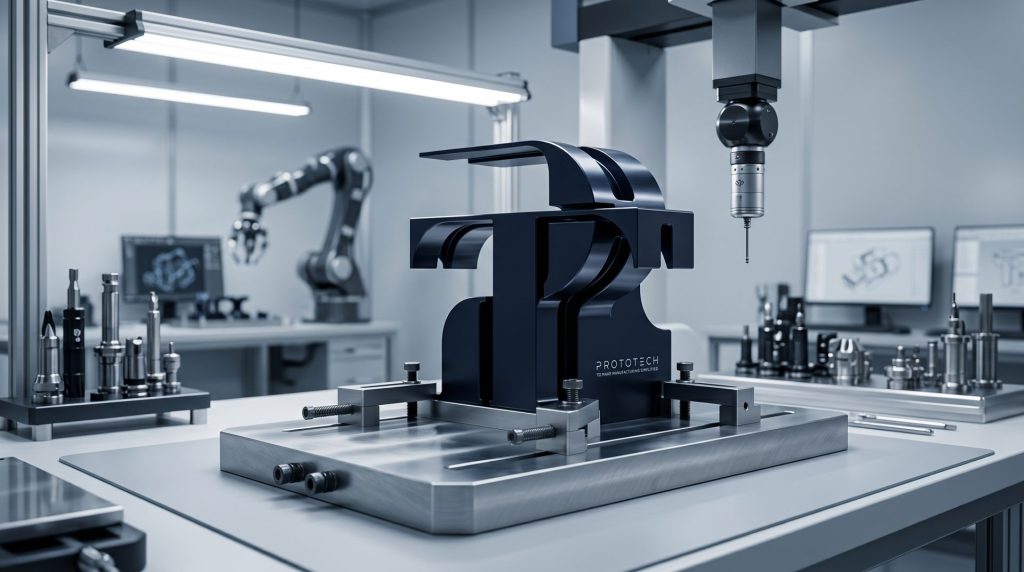
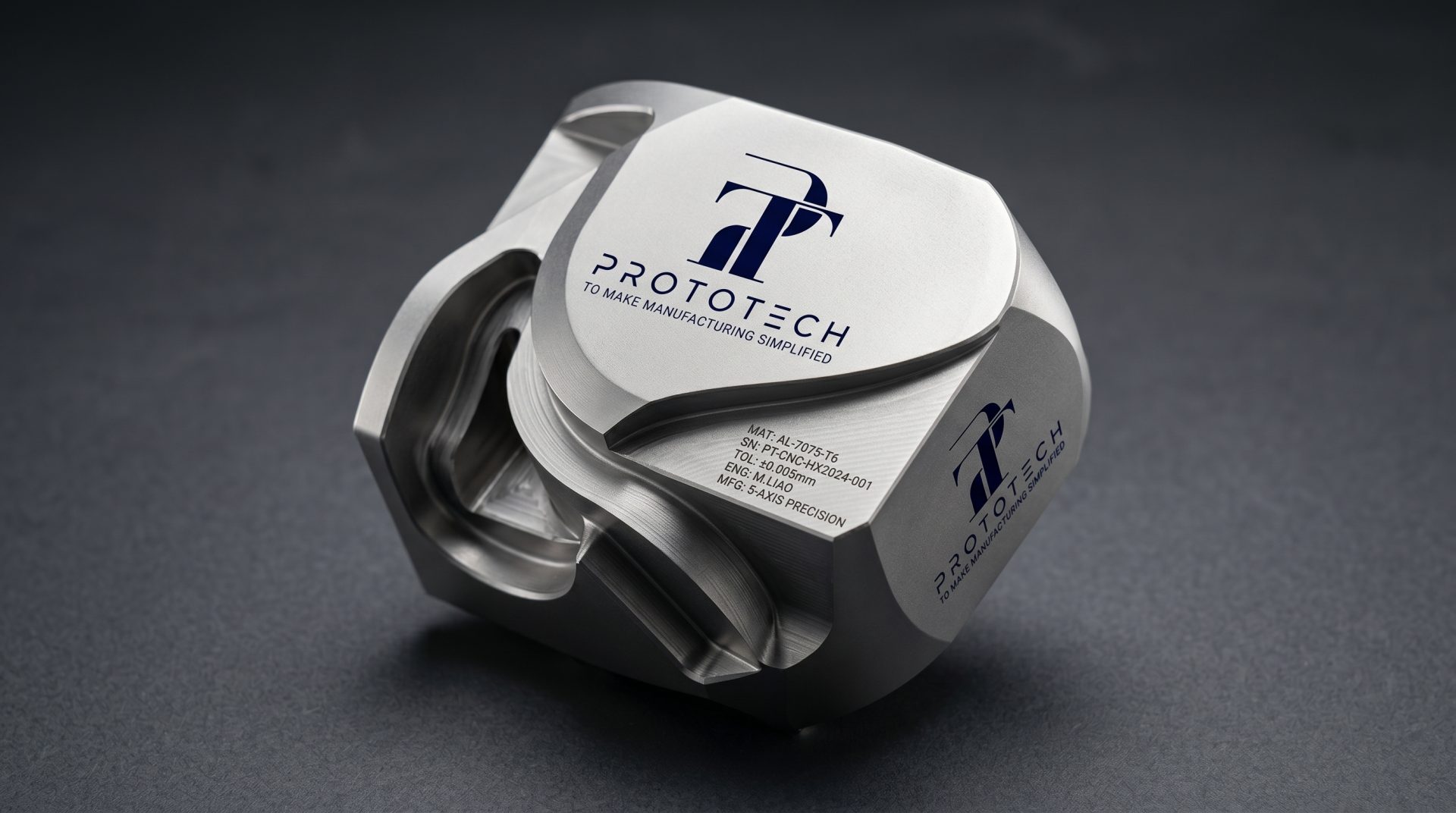
Aerospace and automotive engineers face impossible manufacturing tolerances daily. Designing complex aerodynamic surfaces challenges traditional fabrication methods completely. You must leverage 5-axis cnc machining to conquer these difficult geometric requirements instantly. Using outdated three-axis equipment destroys critical project timelines safely. Restrictive machining methods force engineers into designing heavy, multi-part bolted assemblies. ProtoTech Machining solves these immense industrial limitations flawlessly. We operate advanced multi-axis milling centers inside our dedicated production facility. We cut solid titanium blocks into lightweight, monolithic structures every single day. We understand the rigorous precision required for absolute flight safety and mechanical success.
Subpar machining strategies cost hardware developers millions in scrapped metal and delayed launches annually. You prevent these disastrous supply chain failures by partnering directly with an elite multi-axis machining factory. We utilize premium continuous interpolation technology to maximize surface contouring across complex aerospace impellers. Our metrology engineers verify every single angular coordinate before approving final component shipment. We guarantee your delicate aerospace components survive intense mechanical stress flawlessly. Stop risking your engineering reputation on limited machine shops. Upgrade your hardware procurement strategy today. Secure industry-leading dimensional accuracy effortlessly. Master the physics of multi-axis subtractive manufacturing with our comprehensive B2B engineering guide below.
The Limitations of 3-Axis Operations
Product developers must recognize machine limitations clearly. Standard three-axis mills move cutting tools along three linear directions only. They travel across the X, Y, and Z Cartesian planes. This linear restriction limits geometric possibilities severely. You must overcome these physical barriers safely. We identify these critical manufacturing bottlenecks daily. You optimize production by upgrading technology. We eliminate outdated methods entirely.
Manual Refixturing Errors
Three-axis machines cut only one face simultaneously. Machinists must stop the machine frequently. Operators remove the metal block manually. They flip the part to expose a new face. They clamp the part down again. This manual movement destroys dimensional accuracy completely. Clamping forces warp delicate metal components quickly. Misalignment causes scrapped parts instantly. Tolerance stacking ruins expensive aerospace components permanently. You lose money on every ruined block. We eliminate this manual intervention entirely. Our advanced machines hold the part securely once. You achieve perfect geometric alignment flawlessly.
Restricted Tool Access
Standard spindles point downward permanently. The spinning tool cannot reach complex undercuts. Deep internal cavities block standard end mills securely. Engineers must design split assemblies to compensate. You add unnecessary fasteners and weight to your project. Extra weight penalizes aerospace designs heavily. We solve tool access restrictions directly. Our spindles tilt and rotate aggressively. The cutting tool reaches every single angle effortlessly. We carve deep undercuts without splitting the original design. You maintain absolute structural integrity always. Monolithic designs perform better.
Increasing Production Lead Times
Multiple setups require extended machine time naturally. Operators wait for secondary machines to open. Bottlenecks destroy your production schedule completely. Factories charge exorbitant hourly rates for extended setups. You miss critical market launch windows frequently. We condense six separate operations into one single setup. Our factory accelerates your hardware delivery reliably. You beat competitors to market easily. We eliminate queue times between different workstations. Your project flows through our facility rapidly. We guarantee faster, more reliable hardware procurement.
The Physics of 5-Axis Milling
Furthermore, engineering teams must understand complex machine kinematics perfectly natively. Consequently, product designers reduce machine cycle times dramatically securely by designing for these specific physics. Therefore, we review every CAD model to optimize multi-axis movement entirely. Moreover, understanding these advanced rotational rules optimizes your final manufacturing budget flawlessly.
Understanding the A and B Axes
Specifically, standard mills operate strictly on the X, Y, and Z Cartesian planes natively. Consequently, adding rotational A and B axes transforms the manufacturing dynamic entirely securely. Therefore, the spindle tilts and rotates around the workpiece seamlessly. Furthermore, this dynamic movement enables the cutting tool to approach the solid metal from any conceivable vector securely. Moreover, understanding this complex kinematic rotation remains crucial for modern product designers looking to reduce weight natively. Thus, you unlock unprecedented geometric freedom completely. Ultimately, mastering the rotational axes drives massive innovation globally.
Continuous vs. 3+2 Machining
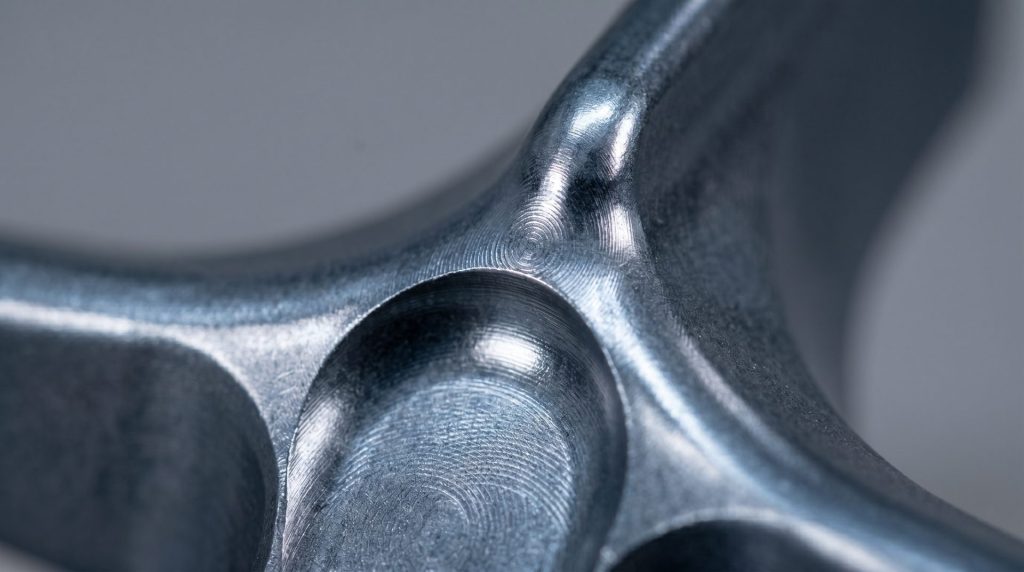
Additionally, engineers must distinguish between positional and continuous multi-axis operations perfectly natively. Consequently, 3+2 machining locks the part at a specific angle before the spindle begins cutting securely. Therefore, this positional method excels at machining flat features on angled planes efficiently. However, continuous 5-axis machining moves all five axes simultaneously during the actual cutting cycle completely. Furthermore, this continuous simultaneous motion generates flawlessly smooth organic contours, which are absolutely essential for aerospace machining natively. Moreover, continuous interpolation prevents tiny stepping marks on curved surfaces securely. Thus, you achieve aerodynamic perfection effortlessly.
Utilizing Shorter Cutting Tools
Moreover, accessing deep pockets traditionally requires excessively long, fragile end mills natively. Consequently, long tools vibrate aggressively under pressure, which ruins the final surface finish securely. Therefore, tilting the spindle head allows our machinists to utilize significantly shorter, more rigid cutting tools completely. Furthermore, shorter tools eliminate destructive chatter and tool deflection flawlessly during heavy titanium removal natively. Moreover, increased tool rigidity permits much faster feed rates and deeper cuts natively. Thus, machine cycle times drop significantly without sacrificing quality securely. Hence, you receive superior precision machined components at a much lower total cost.
Comparison Matrix: CNC Milling Strategies
Procurement directors must compare total lifecycle costs when sourcing precision hardware globally. Notably, analyzing comparative manufacturing strategies optimizes long-term brand profitability heavily. The following matrix contrasts core milling operations to help you specify the correct process for your B2B engineering projects:
| Machining Method | Surface Contouring Ability | Required Fixture Costs | Programming Complexity |
| Standard 3-Axis Milling | Low. Can only produce “stepped” organic surfaces that require extensive manual polishing to smooth out natively. | High. Requires multiple custom soft jaws and fixtures to hold the part for secondary and tertiary operations securely. | Low. Standard G-code generation is straightforward and handled quickly by basic CAD/CAM software completely. |
| 3+2 Positional Machining | Moderate. Excellent for drilling off-angle holes and milling flat planes, but the spindle does not move during cuts securely. | Low. The part remains locked in a single 5-axis vise, eliminating the need for complex custom fixturing natively. | Moderate. Requires establishing new work coordinate planes but avoids complex simultaneous vector calculations completely. |
| Continuous 5-Axis Machining | Maximum. Generates flawless, sweeping aerodynamic curves essential for impellers, turbine blades, and automotive manifolds natively. | Lowest. One setup allows the machine to access five out of six sides of the part without human intervention securely. | Extreme. Demands advanced simulation software and highly skilled programmers to prevent catastrophic machine collisions completely. |
Designing for Multi-Axis Production
Scaling a hardware brand requires strategic global supply chain planning natively. Sending incompatible blueprints to advanced machine shops destroys product launch timelines instantly. We structure our advanced manufacturing processes to support elite aerospace engineers securely. You scale your assembly operations predictably without absorbing unnecessary defect risk. We manage the complex machine programming so you can focus entirely on product innovation.
Consolidating Multi-Part Assemblies
Traditional manufacturing forces engineers to break complex designs into smaller, easily machined sub-components securely. This adds weak welding joints, heavy steel bolts, and complex assembly labor to the final product natively. Multi-axis machining allows you to design monolithic structures. You can consolidate a five-part bolted assembly into a single, ultra-strong billet aluminum component natively. This drastically reduces total vehicle weight and eliminates points of failure securely.
Optimizing Deep Pocket Drafts
When designing deep pockets for standard milling, engineers must add draft angles or large internal radii to accommodate long cutting tools natively. With multi-axis capabilities, the spindle simply tilts to reach the bottom of the pocket securely. This allows you to design straight, perfectly vertical walls deep inside the part without compromising structural integrity or requiring custom-length end mills completely.
Reducing Chatter and Vibration
You must design parts that allow the spindle head sufficient clearance natively. While the tool can tilt, the massive spindle housing cannot intersect with the workpiece securely. By leaving adequate clearance around complex features, you allow our programmers to utilize the shortest possible cutting tools natively. This eliminates chatter marks and guarantees a mirror-like finish on critical O-ring sealing surfaces completely.
Frequently Asked Questions (FAQ)
1. What is the maximum work envelope for your continuous multi-axis milling centers natively?
We execute precise mechanical engineering flawlessly. Our advanced gantry-style multi-axis machines can accommodate massive aerospace chassis and automotive molds securely, processing solid metal blocks up to 1000mm in diameter completely.
2. What CAD/CAM software platforms are compatible with your facility natively?
We deploy rigorous operational protocols strictly natively. We accept all standard 3D CAD formats (STEP, IGES, SolidWorks) natively. Our elite programmers utilize industry-leading CAM software, including Mastercam and Siemens NX, to generate safe, collision-free G-code securely.
3. Can you manufacture complex impellor blades and turbine blisks securely?
Absolutely. We execute precise financial engineering flawlessly. We specialize in continuous multi-axis machining for the energy and aerospace sectors natively, expertly carving complex aerodynamic turbine blades from solid Inconel and Titanium securely.
4. Does multi-axis machining completely eliminate the need for secondary surface finishing natively?
We engineer scalable solutions flawlessly. While continuous interpolation provides an incredibly smooth, swirl-free finish natively, aerospace parts may still require bead blasting or anodizing for corrosion resistance securely. We handle these secondary operations in-house completely.
5. Is positional 3+2 machining cheaper than continuous simultaneous machining securely?
We engineer highly scalable industrial solutions flawlessly. Yes securely. Because positional machining requires less complex programming and allows for faster feed rates on flat planes natively, it is generally more cost-effective for parts that do not require sweeping organic curves completely.
6. What is the standard lead time for a complex multi-axis aerospace prototype natively?
We manage global supply chains flawlessly. Because advanced multi-axis setups eliminate manual refixturing natively, we can often program, machine, and inspect complex functional metal prototypes within 7 to 12 business days securely.
Conclusion
Hardware competition within the lucrative global aerospace and automotive markets remains incredibly fierce constantly. Managing your mechanical development poorly ruins your corporate equity instantly. You must execute your manufacturing strategy through highly verified OEM partners securely. We engineer perfect metal systems that guarantee absolute dimensional stability and supply chain dominance. Partnering for expert 5-axis cnc machining is the ultimate catalyst for success. If your parts require microscopic turned features, explore our swiss cnc machining capabilities. We also excel at custom cnc machining for standard industrial chassis. Protect your complex geometries with advanced machining surface finishes or review our vacuum casting comparison for plastics. To see our capabilities, please view our 5-axis gallery or learn about who we are securely today to begin.